Skip to content

Oven, Stove & Range Repair in Belmont & Greater Boston

An oven that stays cold, a burner that will not light, or food that cooks unevenly can involve different heating and control systems. We diagnose residential gas and electric ovens, stoves, and ranges in Belmont and nearby Greater Boston towns. If you smell gas, leave first and call the utility or 911 from outside; arrange repair only after the area is safe.

  • Open daily 7 AM–7 PM
  • 3-month warranty
  • Insured
  • Service-call credit toward repair
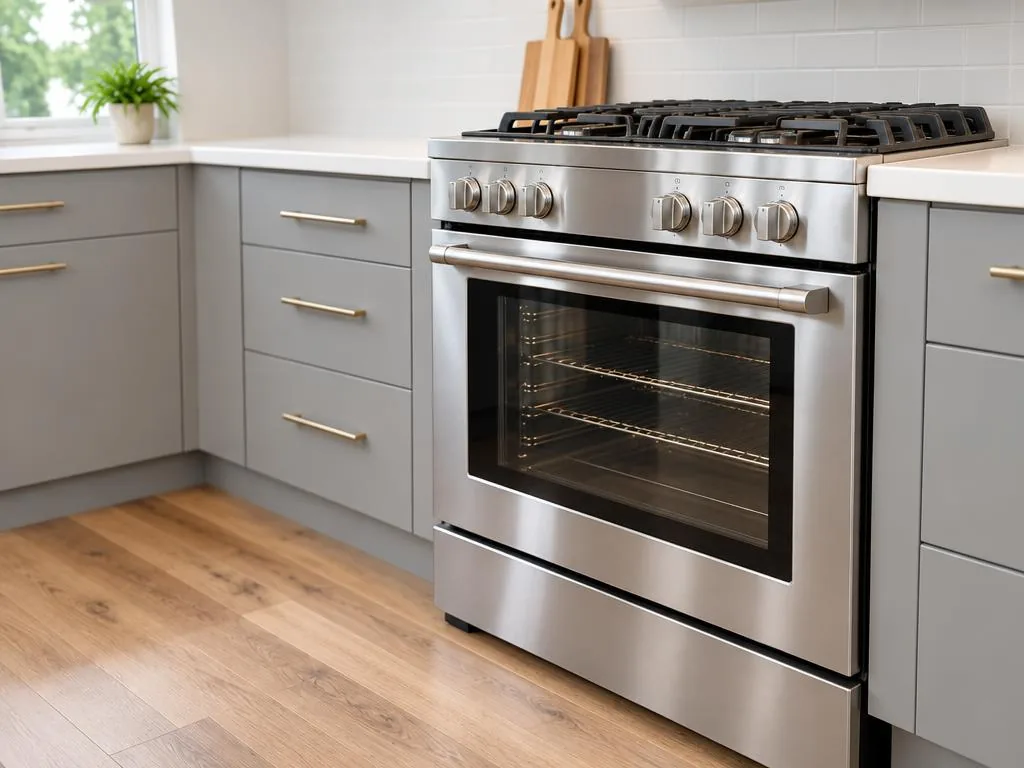
Stainless gas range with a glass-front oven in a residential kitchen

Start with the symptom

The technician explains the diagnosis and quotes the repair before any work begins. The service-call fee is credited toward your repair when you go ahead with it.

Request service

We’ll contact you to confirm availability. Sending a request does not reserve a time.

Symptoms we fix

Oven will not heat

Possible causes. A failed electric bake element, gas igniter, temperature sensor, control relay, or supply problem can prevent heating. Incorrect settings or a control lock can also stop a cycle. Gas and electric models require different checks, so the same symptom does not identify the same part.

What the technician checks. The technician verifies the mode and supply, checks the temperature response, and tests the relevant heating or ignition sequence. On a gas oven, an igniter can glow yet fail to operate the valve correctly; visual glow alone is not a complete diagnosis.

Typical repair. A confirmed failed element, igniter, sensor, or control component can be replaced with a model-matched part. Supply or installation problems need their own correction. Safety controls must remain intact, and gas adjustments are not a homeowner troubleshooting task.

First-visit outlook. Completion on the first visit depends on the confirmed fault, safe access, and the correct model-specific part being available. A return visit may be needed if a component must be ordered.

Oven runs too hot, too cool, or bakes unevenly

Possible causes. A temperature-sensor fault, weak heating element, convection-fan issue, or door-seal problem can affect results. Rack position, cookware, and opening the door frequently can also alter baking. A single disappointing batch is not enough to establish a control fault.

What the technician checks. The technician checks temperature cycling over time, element operation, sensor response, and fan or door condition. Oven temperature normally rises and falls during a cycle. Comparing measured behavior with the model’s operation avoids confusing normal cycling with a failed component.

Typical repair. The fix may replace a tested sensor, element, fan, or seal, or explain an operating adjustment supported by the manual. Calibration is not a substitute for repairing a defective sensor or heater, and the repair should follow the confirmed cause.

First-visit outlook. Completion on the first visit depends on the confirmed fault, safe access, and the correct model-specific part being available. A return visit may be needed if a component must be ordered.

Gas burner will not light

Possible causes. A wet or misaligned burner cap, dirty ignition path, failed spark component, or gas-supply issue may prevent ignition. These possibilities require different remedies. Persistent gas odor is not an invitation to keep turning the knob or attempt another lighting method.

What the technician checks. Once the area is safe, the technician checks burner assembly, spark behavior, ignition components, and the relevant supply conditions. The model and which burners are affected help distinguish a localized ignition fault from a broader control or supply problem.

Typical repair. An owner-accessible cap may need correct positioning after cooling, while a failed electrode or ignition module may require replacement. Any gas-circuit work needs safe professional handling. Do not use a flame to search for leaks or bypass ignition safety.

First-visit outlook. An accessible adjustment or obstruction may be addressed during the visit. A failed component, hidden damage, or an intermittent fault can require parts or further testing; immediate completion is not guaranteed.

Burner igniters keep clicking

Possible causes. Moisture after cleaning, contamination around an electrode, a stuck ignition switch, or a spark-module fault can cause continuous clicking. Clicking can be normal while lighting a burner; persistent clicking after ignition or with knobs off needs a different assessment.

What the technician checks. The technician checks whether the issue follows a particular knob or burner, inspects permitted burner components, and evaluates switch and module behavior. Drying or cleaning advice must follow the exact model manual; live electrical inspection is not an owner task.

Typical repair. A simple moisture or cap-position issue may be corrected, while a tested switch, electrode, or module fault needs the proper replacement. Do not disconnect safety wiring to silence the noise or continue using the appliance if an unsafe condition is suspected.

First-visit outlook. An accessible adjustment or obstruction may be addressed during the visit. A failed component, hidden damage, or an intermittent fault can require parts or further testing; immediate completion is not guaranteed.

Electric burner does not heat or stays on high

Possible causes. A failed surface element, infinite switch, connector, or electronic control can affect a burner. A damaged element may fail completely, while a control fault can prevent normal regulation. A burner that will not turn off is an urgent reason to stop use.

What the technician checks. The technician checks the affected circuit, control response, element condition, and connections with power safely isolated where required. On electronic models, sensing and control behavior matter. The inspection distinguishes a burned connection from a failed heating element or switch.

Typical repair. The remedy may replace a confirmed switch, element, or damaged connector using suitable parts. Shut off the appliance at a safe breaker if a burner remains on; do not leave it unattended or try to repair a live control.

First-visit outlook. Completion on the first visit depends on the confirmed fault, safe access, and the correct model-specific part being available. A return visit may be needed if a component must be ordered.

Oven door will not unlock or a self-clean cycle fails

Possible causes. A door-lock mechanism, temperature sensor, interrupted cycle, or control fault may prevent release. After a cleaning cycle, the oven can intentionally remain locked until it cools. The latch should not be forced, especially when the cavity is still hot.

What the technician checks. The technician checks actual temperature, lock feedback, and the model’s cycle state before assessing the mechanism or control. A manufacturer-directed cancellation procedure may differ by model. Knowing whether the problem began during self-cleaning helps narrow the diagnosis.

Typical repair. A confirmed lock or sensing fault can be repaired; an oven that is still cooling may only need time under its normal controls. Do not pry the door, defeat the latch, or repeatedly restart self-cleaning to try to release it.

First-visit outlook. Completion on the first visit depends on the confirmed fault, safe access, and the correct model-specific part being available. A return visit may be needed if a component must be ordered.

Types we service

We service residential gas ranges, electric ranges, wall ovens, and dual-fuel ranges. The cooktop and oven may use different fuel types on the same appliance. Built-in openings, hardwired connections, and cabinet access can affect the visit. Tell us the model and installation details, and do not pull out a gas range to inspect its connector.

  • Gas ranges
  • Electric ranges
  • Wall ovens
  • Dual-fuel ranges
  • Freestanding and built-in ovens

Brands we work on

  • Wolf logo
  • Thermador logo
  • Viking logo
  • Miele logo
  • Samsung logo
  • LG logo
  • GE logo
  • Whirlpool logo
  • Maytag logo
  • KitchenAid logo
  • Bosch logo
  • Frigidaire logo
  • Fisher & Paykel logo

Independent appliance repair service, not affiliated with or authorized by any manufacturer. Call with the model to confirm service for a brand not listed here.

What to do while you wait

  • For a suspected gas leak, leave without operating switches or a phone indoors, and call the gas utility or 911 from outside. Do not try to shut a valve or locate a leak inside the affected area.
  • Turn off controls and allow the appliance to cool. If an electric burner stays energized, disconnect it at a safely accessible breaker and keep people away. Do not touch hot surfaces or exposed wiring.
  • Follow only owner-manual instructions for removable burner caps or external cleaning. Unplug or isolate power when the manual requires it; leave gas valves, internal wiring, and ignition safety circuits to a professional.
  • Do not use the oven to heat the home, force a locked door, bypass safety devices, or repeatedly run self-cleaning as a repair attempt. Record error codes and which cooking functions still work.

Repair or replace?

An igniter, element, or sensor repair can make sense on an otherwise sound appliance, while several faults or major structural damage change the decision. Compare the quote with the installed replacement cost, not only the advertised appliance price. Wall-oven cutouts and dual-fuel connections can add replacement requirements.

Cooking-appliance service life varies with design, use, and condition; no age cutoff decides every case. Consider recurring failures, parts availability, door and cavity condition, and the functions you need. A gas or electrical safety problem must be addressed whether you choose repair or replacement.

Cost factors

The repair quote depends on the diagnosed fault, the correct part for the model, labor time, and safe access to the appliance. A control board replacement is a different job from an accessible connection or adjustment. Parts ordering and a return visit may affect the plan, so ask what is included before deciding to proceed.

The technician explains the diagnosis and quotes before work begins. The service-call fee is credited toward your repair when you go ahead with it. There is no published price range because symptoms do not establish the work required. Ask about coverage for the proposed repair and whether replacement is a reasonable alternative.

What appliance repair costs →

Repairs are backed by a 3-month warranty. Warranty information →

Related guides

Oven, Stove & Range Repair FAQs

Why does the gas oven igniter glow without lighting?

An igniter can glow without performing correctly under the model’s required ignition sequence. A valve, supply, or control issue is also possible. Testing is needed before recommending a part. Do not attempt internal gas adjustments, and treat any gas odor as an emergency rather than a routine heating complaint.

Should the oven temperature stay exactly on the setting?

Ovens normally cycle above and below a target temperature. The pattern over time matters more than a single reading. Persistent large deviations, failed elements, or sensor faults need diagnosis. Use the manufacturer’s instructions for calibration; changing a setting does not repair a defective sensor or heating circuit.

Can I use another burner while one is faulty?

That depends on the fault. Do not use the appliance if there is gas odor, damaged wiring, a burner that stays on, or another unsafe condition. Turn it off and seek appropriate help. A technician can advise after diagnosis; a localized symptom does not prove the rest of the appliance is safe.

Do you repair wall ovens and dual-fuel ranges?

These residential types are included in our service list. Mention the model, fuel arrangement, and installation when you request a visit. Access and model-specific parts can affect the repair. Do not remove a hardwired wall oven or move a gas range yourself to make it accessible.

Is self-cleaning a way to fix heating problems?

No. A self-clean cycle is not a diagnostic or repair method for a heater, sensor, or lock fault. Avoid running it repeatedly when the oven behaves abnormally. Let a locked oven cool and follow the model’s instructions. Forcing the door can damage the latch or create a burn hazard.

What should I do if I smell gas?

Leave immediately and do not use electrical switches, appliances, or a phone indoors. Call your gas utility or 911 from outside. Do not move the appliance or search for the leak. Request repair only once emergency responders or the utility have made the situation safe.

How do I prepare for the appointment?

Tell us which function fails, whether the appliance is gas or electric, and any error code. Have the model number ready if safely accessible. Leave the appliance cool and do not dismantle it. The technician quotes before work; part availability and access determine whether another visit is necessary.

Request oven, stove & range repair

Send a request and our team will contact you to confirm availability.

Request Service
Call TextRequest