
Dryer not heating: thermal fuse, element, gas igniter or vent?
Published
Updated
6 min read
A dryer can tumble normally while producing no heat, or it can heat but take several cycles to dry a load. Those are different symptoms. Cycle settings, airflow, electrical supply and internal heating components all deserve consideration, but a symptom cannot identify a failed thermal fuse, element or gas igniter on its own.
This guide keeps homeowner checks outside the cabinet. You can note the cycle, clean the lint screen and observe an accessible exhaust outlet without testing live wiring or opening a gas burner compartment. If heat, odor or shutdown behavior seems unsafe, stop using the appliance instead of running more diagnostic loads.
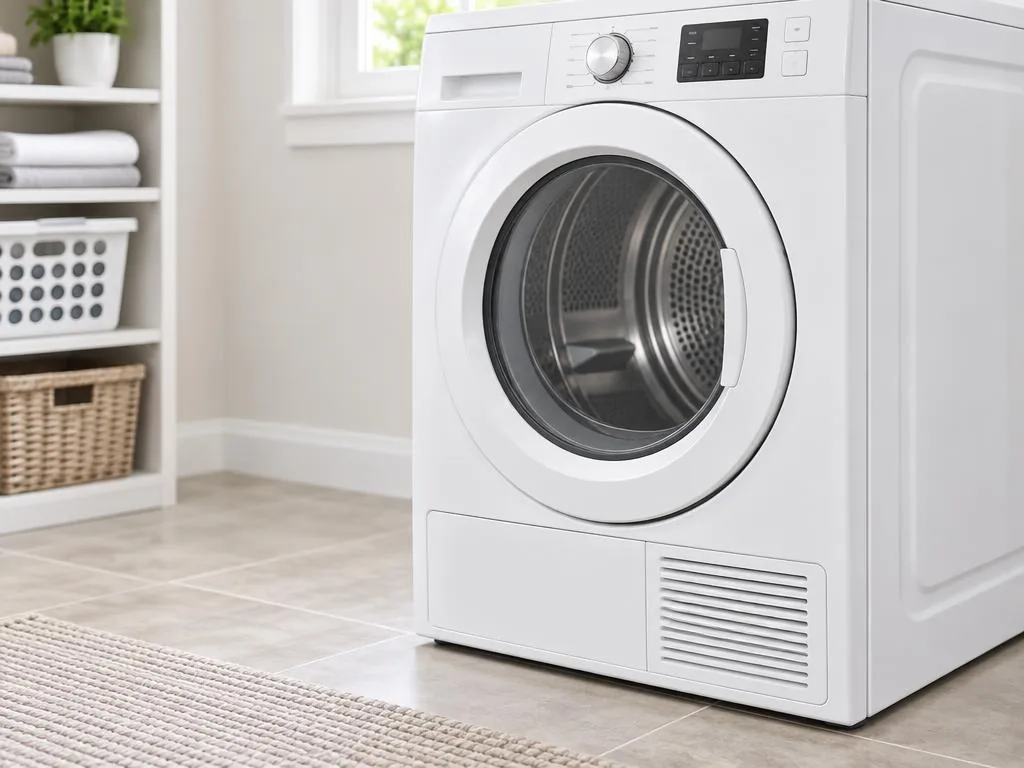
1. Separate no heat from slow drying
Describe whether the drum turns, whether the chosen cycle normally uses heat and whether clothes are warm but damp at the end. A cool-down period is not the same as an entire cycle without heat. Record the load size and fabric type rather than assuming every damp load means a failed heater.
If the dryer is unusually hot or smells burned, do not run it again to confirm your observation. Some loads and cycles have different expected results. A clear description of what happened during the last normal use is enough to begin a service conversation without intentionally repeating an unsafe condition.
2. Check the selected cycle and settings
Read the model manual for air-only, delicate, energy-saving and timed-dry settings. Some settings intentionally use little or no heat. Check that the selected options match the load, but do not turn every setting to maximum as a substitute for understanding the cycle.
A control lock or an interrupted cycle may affect operation differently from a heating fault. Photograph any code before clearing it. Do not enter a service diagnostic mode from an online button sequence for a similar dryer; the exact model determines the appropriate procedure and whether an owner should use it.
3. Clean the lint screen as instructed
Remove lint from the screen according to the owner’s manual and put it back securely before use. The U.S. Fire Administration advises filter cleaning before and after cycles and says not to operate without the lint filter. A screen clogged with lint reduces airflow.
Routine screen care is not the same as cleaning a concealed exhaust duct. Do not push a tool through the dryer’s internal air path or dismantle the filter housing. If the screen is damaged, the fitting is loose or lint accumulates in unexpected places, mention that condition when arranging service.
4. Observe only safely accessible exhaust areas
For a dryer vented outdoors, look for an obvious crushed connector or an obstructed outlet from a safe standing position. Do not pull a gas dryer, disturb its connection or climb onto a roof. Tell the provider if the termination is high, concealed or difficult to access.
A lint restriction can cause weak exhaust and long drying times. Cleaning cannot correct every routing problem or repair a disconnected duct. Prosperium offers dryer vent cleaning, with scope depending on safe access and the exhaust route. Heat-pump and condenser dryers require their own maintenance approach instead.
5. Understand what internal parts do
An electric heating element supplies heat, while a gas dryer uses an ignition and burner system. Thermal protection stops operation under unsafe conditions. The way a dryer behaves when a protective device opens depends on the model; no single symptom establishes which component failed.
A blown protective component is a reason to investigate the cause, including overheating and airflow, not simply install a replacement and resume use. Continuity checks, live supply testing, gas ignition evaluation and control diagnosis belong to a trained professional using the model’s technical information and safe isolation procedures.
6. Collect the model and operating history
Locate the accessible model label, usually described in the manual near the door opening or another rating-plate location. Tell the provider whether the dryer is gas, electric, heat-pump or condenser, and whether it is stacked or inside a closet. Note any display code and recent change.
Describe the exhaust route if known, including an outdoor wall or roof termination, without climbing to inspect it. Mention repeated shutdowns, a hot laundry room and whether heat has vanished completely. This helps separate an appliance repair request from a vent-cleaning assessment without promising a cause before inspection.
When to call a pro
Arrange service when a heating cycle remains cold, safe lint and setting checks do not help, or the dryer repeatedly shuts down. Stop use for overheating and burning odors. A clean lint screen alone does not show that the entire exhaust path is clear.
The technician can assess heating, controls and airflow together. If vent cleaning is needed, its scope is confirmed from the route and safe access. A first-visit repair is not guaranteed because parts and diagnosis vary; work is explained and quoted before proceeding.
In-home service around our Belmont base
Frequently asked questions
Does a symptom or error code identify the failed part?
No. It identifies an observed or detected condition that may have several causes. The model, operating history and appropriate testing determine the diagnosis. Do not buy a component or open the appliance based only on a similar online example.
Should I keep resetting the appliance?
Use only a reset explicitly permitted in your exact owner’s manual. Repeated resets can hide the sequence of events without correcting a restriction or failed component. Stop and arrange service if the fault returns, and stop use immediately for a safety concern.
What should I include in a service request?
Provide the complete model if safely available, the affected function, when the problem began and any exact display message. Mention leaks, odors, access restrictions and the owner-permitted checks already tried. Sending a request is followed by confirmation of availability and a visit time.