
Ice maker not making ice: how to reset and what to check
Published
Updated
6 min read
An ice maker depends on the right control setting, adequate water supply and suitable freezer conditions. A dispenser that will not deliver existing ice is a different problem from a tray that is not producing new cubes. Separate those symptoms before considering a reset or replacement.
There is no universal reset-button sequence for every refrigerator ice maker. Some models use a switch, arm, menu or specific test procedure; others do not provide an owner reset. Use only your exact manual’s instructions and do not assume a reset repairs a blocked line, warm freezer or failed mechanism.
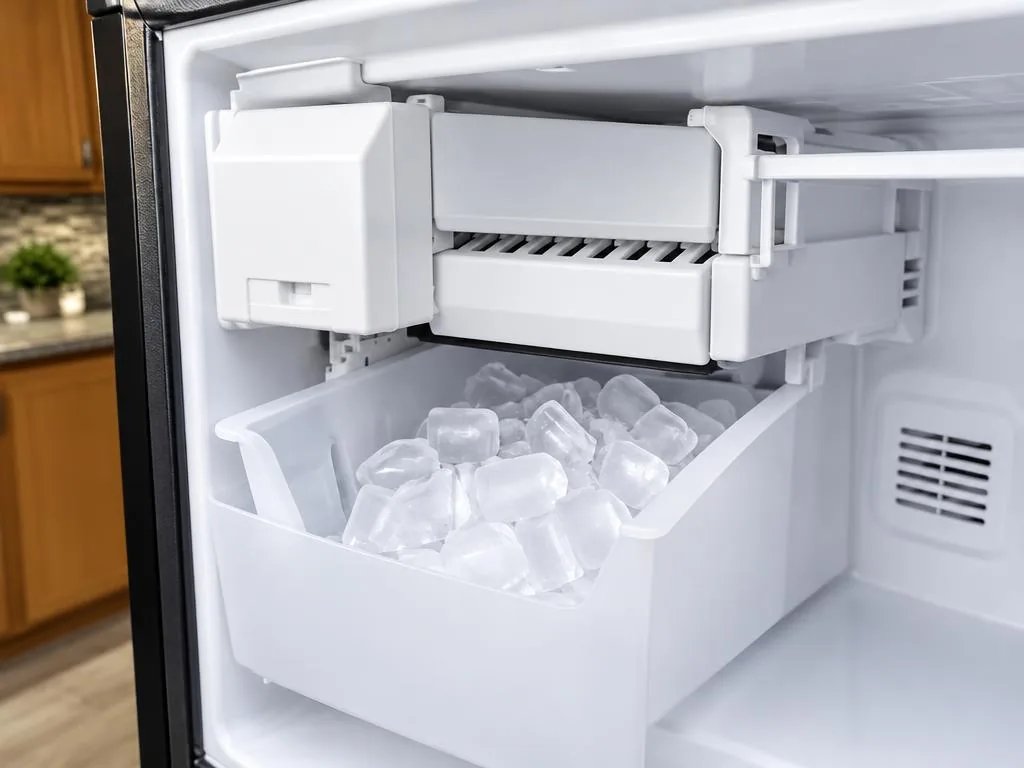
1. Separate production from dispensing
Look in the accessible ice bin as the manual allows. If ice is present but will not dispense, the symptom concerns delivery, clumping or controls rather than necessarily the fill-and-harvest mechanism. Describe whether cubes are absent, small, hollow, stuck together or simply not reaching the glass.
Do not put fingers into an auger or force a jammed dispenser. Turn off the relevant function as directed before permitted bin handling. A missing bin, an improperly seated bin or a selected lock mode may affect dispensing on some models. Note what is visible without removing internal covers or reaching into concealed mechanisms.
2. Check that ice production is enabled
Find the model’s normal on/off control in the manual. It may be a switch, arm or menu; do not push an unfamiliar lever or assume its position. Check whether the selected control concerns ice production, dispensing or a broader refrigerator operating mode.
A household member may have switched ice off for cleaning or storage, but that is only a possible explanation. Return the control to the prescribed setting and follow the manual’s expected operation guidance. If a display shows an error or the control will not respond, record it rather than repeatedly trying unrelated button combinations.
3. Consider freezer conditions
Whirlpool identifies freezer temperature as one factor in ice production. Confirm the recommended setting for the exact model and note whether other frozen contents are softening. A refrigerator display is a setpoint, not necessarily a measured cabinet temperature; use appropriate temperature information when available.
Do not adjust to an extreme setting simply to force ice production. If cooling is inadequate, the ice problem may be part of a refrigerator fault. Protect food and request refrigeration service instead of waiting through reset attempts. The right next step depends on whether the whole freezer is warm or only the ice mechanism is affected.
4. Check visible water supply and filter information
Whirlpool also lists restricted water supply and water-filter issues among possible causes. Inspect only accessible tubing for an obvious kink and confirm an accessible supply valve is in its normal position if safe. Do not pull the refrigerator or disconnect a pressurized line to investigate.
Read the manual for the specified filter and replacement procedure. An incorrect or improperly fitted filter can affect delivery. Follow the prescribed flushing instructions if applicable, rather than using a generic volume. No water at a dispenser may support a supply concern, but it does not by itself identify a failed inlet valve.
5. Reset only if your manual provides a procedure
Locate a model-specific owner reset or troubleshooting instruction before doing anything. Do not hold a hidden button, enter a diagnostic mode or repeatedly command harvest cycles because an online video shows a similar ice maker. Internal designs and the safe procedure can differ even within a brand.
If the manual permits a reset, perform it once as directed and respect the stated observation period. Do not force the tray or use heat to accelerate recovery. A reset is not a diagnosis; recurring failure, leaks or freezing in the same place still require investigation of the underlying condition.
6. Document the pattern for service
Provide the refrigerator and ice-maker identification available from the normal labels or documents. Include whether the freezer is cold, water dispenses, the bin is empty, a filter changed recently or frost has appeared. Mention the exact reset procedure used, if any, so the technician has a reliable history.
Tell the provider about leaks and safely accessible water controls, plus built-in or panel-ready installation. A technician may assess supply, fill, temperature, sensing and harvest operation. Water-valve, wiring and internal mechanism work is professional diagnosis, not the next homeowner step after a failed reset.
When to call a pro
Call when ice remains absent after the manual’s permitted control and supply checks, a reset does not hold, or leakage and repeated freezing occur. If the freezer is warm, prioritize food safety and refrigeration service rather than treating it as an isolated ice complaint.
A diagnosis can distinguish water delivery, cooling and ice-maker mechanism faults. Prosperium explains the findings and quote before work. Model and parts availability affect whether the required work can be completed on a first visit; a reset should never be presented as a guaranteed repair.
In-home service around our Belmont base
Frequently asked questions
Does a symptom or error code identify the failed part?
No. It identifies an observed or detected condition that may have several causes. The model, operating history and appropriate testing determine the diagnosis. Do not buy a component or open the appliance based only on a similar online example.
Should I keep resetting the appliance?
Use only a reset explicitly permitted in your exact owner’s manual. Repeated resets can hide the sequence of events without correcting a restriction or failed component. Stop and arrange service if the fault returns, and stop use immediately for a safety concern.
What should I include in a service request?
Provide the complete model if safely available, the affected function, when the problem began and any exact display message. Mention leaks, odors, access restrictions and the owner-permitted checks already tried. Sending a request is followed by confirmation of availability and a visit time.