Skip to content

Ice Maker Repair in Belmont & Greater Boston

No ice, hollow cubes, or water around the dispenser can involve the refrigerator’s water supply, temperature, or ice-making mechanism. We diagnose refrigerator ice makers and dispensers in homes across Belmont and nearby Greater Boston towns. Tell us whether the refrigerator is cooling normally and whether the water dispenser still works.

  • Open daily 7 AM–7 PM
  • 3-month warranty
  • Insured
  • Service-call credit toward repair
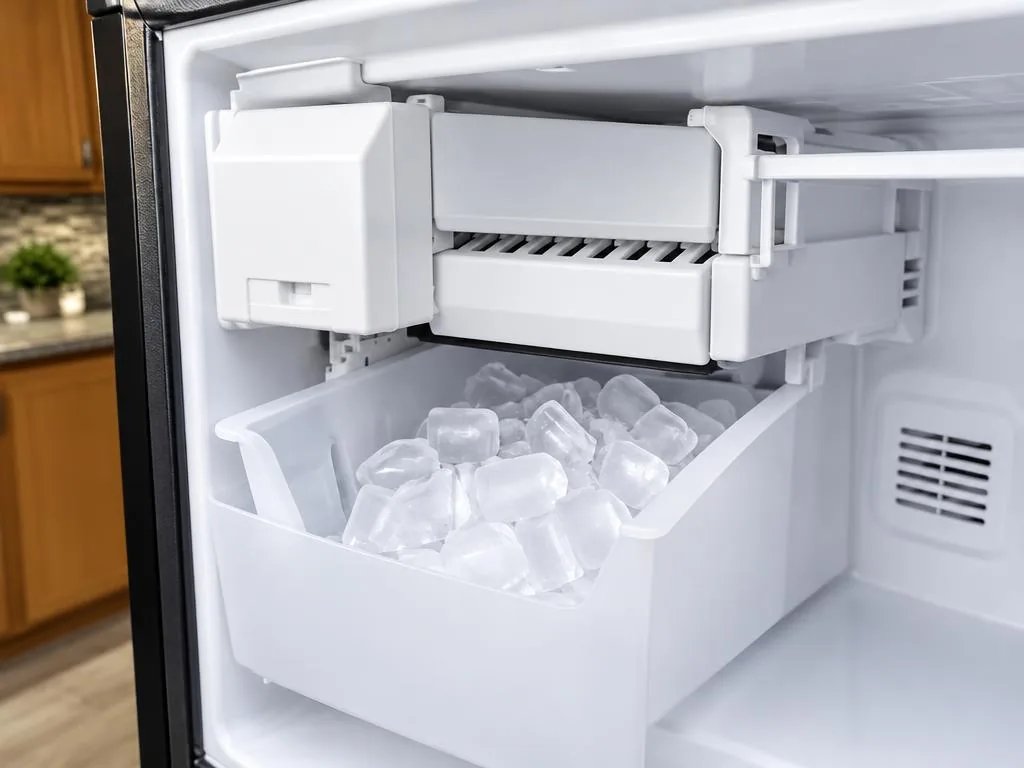
Installed refrigerator ice maker above a bin of ice cubes

Start with the symptom

The technician explains the diagnosis and quotes the repair before any work begins. The service-call fee is credited toward your repair when you go ahead with it.

Request service

We’ll contact you to confirm availability. Sending a request does not reserve a time.

Symptoms we fix

Ice maker produces no ice

Possible causes. A disabled ice maker, warm freezer, restricted water supply, failed inlet valve, or harvest/control fault can stop production. A full-bin sensor or shutoff arm may also prevent operation normally. These possibilities require different checks rather than an automatic ice-maker replacement.

What the technician checks. The technician checks freezer conditions, enable settings, bin sensing, water flow, and the model’s fill-and-harvest sequence. A working water dispenser does not prove every valve circuit serving the ice maker is working. Installation and filter history provide useful context.

Typical repair. The solution may restore a supply or setting, replace a tested valve or sensor, or repair the ice-making assembly. If cooling is inadequate, that cause also needs attention. An ice-maker part alone will not solve a warm-freezer problem.

First-visit outlook. Completion on the first visit depends on the confirmed fault, safe access, and the correct model-specific part being available. A return visit may be needed if a component must be ordered.

Small, hollow, or incomplete cubes

Possible causes. Restricted water flow, a clogged filter, low supply pressure, or an inlet-valve problem can underfill the mold. Fill settings and supply conditions vary by model. Hollow cubes can also accompany changes in temperature or production conditions rather than a broken harvest motor.

What the technician checks. The technician evaluates water delivery, filter compatibility, valve operation, and fill behavior. A kinked external line and an internal valve fault require different remedies. The model manual determines permitted filter and fill procedures; improvising adjustments can create leaks.

Typical repair. A diagnosed restriction can be corrected or a failed valve replaced. Use only the appropriate filter and manual-approved procedure for the model. If the household supply is inadequate, that needs a separate correction rather than changing unrelated ice-maker components.

First-visit outlook. An accessible adjustment or obstruction may be addressed during the visit. A failed component, hidden damage, or an intermittent fault can require parts or further testing; immediate completion is not guaranteed.

Ice maker or dispenser leaks water

Possible causes. A leaking inlet valve, damaged connection, misdirected fill tube, or blocked drain/ice path can let water escape. A few residual dispenser drops differ from repeated pooling or an active leak. Identify whether water appears during filling, dispensing, or between cycles.

What the technician checks. The technician traces the water path, checks valve shutoff and fittings, and inspects the relevant fill area and dispenser components. Ice around a fill tube can signal more than one cause. The source should be confirmed before replacing the complete assembly.

Typical repair. A diagnosed valve, tube, connection, or dispenser component can be repaired. Shut the accessible refrigerator water supply if an active leak is damaging the floor and it is safe to do so. Keep water away from outlets and do not reach wet wiring.

First-visit outlook. Completion on the first visit depends on the confirmed fault, safe access, and the correct model-specific part being available. A return visit may be needed if a component must be ordered.

Ice dispenser jams or will not dispense

Possible causes. Clumped ice, a blocked chute, an auger or drive fault, or a door-switch/control issue can stop dispensing. Long storage and repeated partial melting can make ice stick together. Ice production and dispensing are separate functions, so one may work while the other fails.

What the technician checks. The technician checks bin fit, ice condition, chute movement, drive operation, and relevant interlocks. A motor sound without delivery can indicate a jam or damaged coupling, but inspection is needed. Fingers and tools must be kept away from a powered auger.

Typical repair. The fix may clear an owner-removable bin obstruction safely or replace a confirmed drive, coupling, or switch component. Follow the manual for bin removal. Do not force a powered dispenser, bypass door switches, or break ice with sharp tools near the mechanism.

First-visit outlook. An accessible adjustment or obstruction may be addressed during the visit. A failed component, hidden damage, or an intermittent fault can require parts or further testing; immediate completion is not guaranteed.

Fill tube freezes or frost returns around the maker

Possible causes. A dripping valve, poor fill delivery, air leakage, or temperature-related issue may contribute to frozen water near the fill path. Some designs have model-specific heaters or controls. Removing visible ice without identifying why it formed may only give temporary relief.

What the technician checks. The technician checks whether the valve closes properly, evaluates fill alignment and freezer conditions, and inspects model-specific components. The pattern and timing help distinguish slow leakage from a temperature or airflow issue. A frozen tube does not by itself identify a heater failure.

Typical repair. A confirmed valve, seal, or model-specific control fault can be repaired. Thawing must avoid damage to plastic parts and cooling surfaces. Do not use a torch, sharp tool, or uncontrolled heat; the lasting repair depends on the underlying cause.

First-visit outlook. Completion on the first visit depends on the confirmed fault, safe access, and the correct model-specific part being available. A return visit may be needed if a component must be ordered.

Ice has an unusual taste, odor, or appearance

Possible causes. Food odors, old ice, filter condition, water supply, or contamination in accessible storage areas can affect ice quality. A new filter may need the manufacturer’s flushing procedure. These concerns are different from a harvest-motor failure and may not require an appliance part.

What the technician checks. The technician considers filter and supply history, storage conditions, and accessible ice-bin condition. If water quality is the concern, appliance diagnosis cannot certify drinking-water safety. Follow local water advisories and do not assume clear ice proves the water is safe.

Typical repair. The next step may be manual-approved bin cleaning and filter maintenance, or assessment of a damaged component if one is found. Persistent water-quality concerns may need the water supplier’s guidance. Stop using suspect ice rather than masking taste with additives.

First-visit outlook. An accessible adjustment or obstruction may be addressed during the visit. A failed component, hidden damage, or an intermittent fault can require parts or further testing; immediate completion is not guaranteed.

Types we service

This service covers refrigerator ice makers, in-door dispensers, and freezer-mounted ice-making assemblies. These systems vary by refrigerator model and may use separate valves or sensors for ice and drinking water. We do not present this as commercial standalone ice-machine service. Share the refrigerator model, filter history, and which functions still operate.

  • Refrigerator ice makers
  • In-door ice dispensers
  • Freezer-mounted ice makers

Brands we work on

  • Sub-Zero logo
  • Samsung logo
  • LG logo

Independent appliance repair service, not affiliated with or authorized by any manufacturer. Call with the model to confirm service for a brand not listed here.

What to do while you wait

  • For an active water leak, close the safely accessible refrigerator water-supply valve and protect the floor. Avoid outlets and wiring around standing water, and disconnect power only if safe.
  • Check only the owner-accessible enable switch, bin seating, and filter status described in the manual. A newly installed refrigerator or replaced filter may need model-specific time and flushing before normal production.
  • Do not put fingers or tools into a powered auger or dispenser. Switch off power before manual-approved bin handling, and never bypass a door switch or ice-maker safety device.
  • Keep freezer vents clear and doors closed. Do not chip frozen fill tubes, apply open flames, or dismantle the valve or electrical assembly. Record whether ice production, water dispensing, and cooling changed together.

Repair or replace?

An ice-maker complaint does not always justify replacing the refrigerator. A supply restriction, valve, sensor, or assembly fault may be repairable while the cooling system remains sound. Compare the specific quote with the refrigerator’s overall condition and whether other recurring problems are present.

Ice-maker service life is not a separate universal countdown. The host refrigerator’s condition, model-specific part availability, water conditions, and maintenance all matter. A historical refrigerator average of about 13 years is context, not a rule for your appliance. Do not replace a working refrigerator solely because an ice bin is empty.

Cost factors

The repair quote depends on the diagnosed fault, the correct part for the model, labor time, and safe access to the appliance. A control board replacement is a different job from an accessible connection or adjustment. Parts ordering and a return visit may affect the plan, so ask what is included before deciding to proceed.

The technician explains the diagnosis and quotes before work begins. The service-call fee is credited toward your repair when you go ahead with it. There is no published price range because symptoms do not establish the work required. Ask about coverage for the proposed repair and whether replacement is a reasonable alternative.

What appliance repair costs →

Repairs are backed by a 3-month warranty. Warranty information →

Related guides

Ice Maker Repair FAQs

Why does water dispense but no ice is made?

The refrigerator may use different valve paths and controls for ice and water. Freezer temperature, bin sensing, or a harvest fault can also stop ice while water still dispenses. Tell us both symptoms. A functioning dispenser narrows the possibilities but does not prove the ice-maker valve and controls are healthy.

Can the filter be the only cause?

A restricted or incorrectly fitted filter can reduce water delivery. Check compatibility and the manual’s procedure rather than use an improvised bypass. If correct filter maintenance does not restore production, the valve, fill path, temperature, or mechanism may need diagnosis. Not every no-ice complaint requires a new assembly.

How long should a new refrigerator take to make ice?

Timing depends on the model and installation conditions. Whirlpool guidance commonly allows about 24 hours for production to begin and longer for full output. Consult your exact manual and confirm the water supply and enable settings. Persistent lack of ice after the specified period needs assessment.

Can I break apart a frozen ice bin?

Follow the owner manual for safe bin removal and handling with the mechanism off. Never place tools or fingers in a powered auger or force parts. Sharp tools can damage the bin and mechanism. If ice repeatedly clumps or jams, describe that pattern so temperature and dispenser operation can be checked.

Does a frozen tube need only thawing?

Not always. A valve that drips, poor fill conditions, or a model-specific temperature/control problem may cause recurring freezing. Thawing without diagnosis can be temporary and unsafe if done with sharp tools or excessive heat. The technician checks the cause before recommending a component or assembly replacement.

Do you service commercial standalone ice machines?

Our confirmed scope is residential in-home service, including refrigerator ice makers and dispensers. We do not advertise commercial standalone ice-machine work. If your appliance differs from that scope, call with the model before requesting a visit rather than assume every ice-making machine is covered.

Can I get a quote before repair?

Yes. The technician explains the diagnosis and quotes before work begins. Ask whether the problem is in the supply, valve, dispenser, or ice-making assembly and whether a part needs ordering. The service-call fee is credited toward the repair when you proceed; completed repairs have a 3-month warranty.

Request ice maker repair

Send a request and our team will contact you to confirm availability.

Request Service
Call TextRequest